
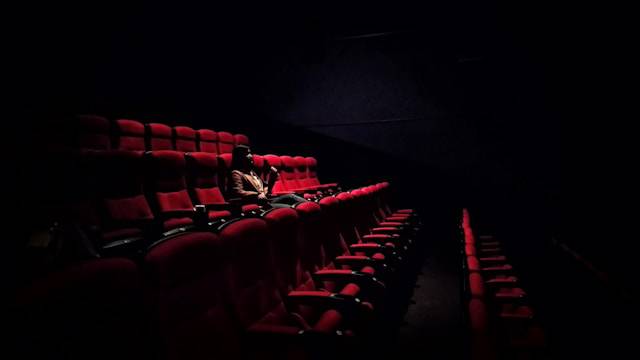
Cinema in Tamil Nadu: Social justice must reach the last row too
For generations of Tamils, going to the cinema was more than watching a film. It was one of the few forms of entertainment people from every economic background could enjoy. A daily wage worker, a salaried employee, a student and a business owner could all watch the same movie in the same theatre by choosing seats that matched their budget. The experience was shared, even if the ticket prices were different.
Today, that experience appears to be changing. For many families, a trip to the cinema has become an expensive outing. Ticket prices, parking charges and food together can make a single movie unaffordable for lower-income and even many middle-income households. As a result, cinema is gradually shifting from a common cultural experience to an occasional luxury.
This raises an important public policy question: should access to entertainment also be viewed through the lens of social justice?
Tamil Nadu has long been recognised for placing social justice at the centre of governance. The state has introduced pioneering reforms in education, public distribution, healthcare, social welfare and public transport to ensure that economic status does not become a barrier to opportunity. If social justice is the guiding principle of governance, should it also influence the regulation of licensed public entertainment?
The Tamil Nadu Cinemas (Regulation) Rules currently require that at least 10% of the seats in a theatre be reserved for the lowest-priced class. When this provision was introduced more than two decades ago, it may have reflected the circumstances of that period. However, the question today is whether a fixed minimum of 10% still serves the objective of meaningful public access.
In many theatres, the lowest-priced seats are limited in number and are often located in the least desirable viewing areas. While premium seating has expanded to meet changing consumer preferences, affordable seating has become increasingly limited. Whether this represents the right balance is a question worthy of public discussion.
The issue is not one of opposing business or profitability. Cinema theatres are private enterprises that deserve a reasonable return on their investment. Yet they also operate under licences granted by the state and provide an important cultural service to society. Good public policy should balance commercial sustainability with public accessibility.
The debate is equally important from an economic perspective. When prices rise beyond the purchasing capacity of a large section of consumers, demand naturally declines. Lower-income and middle-income households are generally more price-sensitive. If affordable options are limited, many potential viewers simply stay away from theatres. This represents not only a loss of recreational opportunity for families but also a loss of potential customers for the cinema industry itself. A pricing structure that accommodates different income groups can expand the audience base while allowing premium experiences to coexist for those willing to pay more.
Perhaps it is time to revisit an important question: should the proportion of affordable seats remain fixed, or should it be periodically reviewed using current socio-economic data, including household income distribution, inflation, consumer spending patterns, and market demand? Public policy should evolve as society evolves.
Tamil Nadu has recently reaffirmed its commitment to the ideals of social justice through its governance and public institutions. Those ideals have shaped the state’s progress in many sectors. Extending the same principle to cultural participation does not mean subsidising every cinema ticket or controlling every business decision. It simply means ensuring that ordinary families are not unintentionally left behind as the economics of entertainment change.
Social justice is ultimately about inclusion. It is about creating opportunities for every citizen to participate in society with dignity, regardless of economic status. Cinema may not be as essential as education or healthcare, but it remains an important part of our cultural life and collective identity.
Perhaps the next conversation on social justice should begin not in the front row, but in the last row of the cinema hall.