
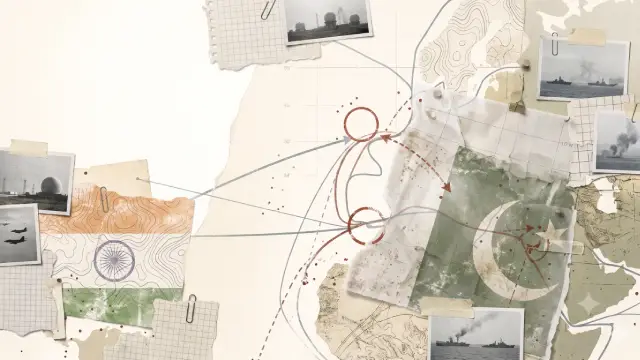
Why lasting peace in India-Pakistan relations matters
Few relationships in world politics show the challenge of lasting peace as clearly as India-Pakistan relations. Since partition in 1947, the two neighbours have had wars, military clashes, broken diplomacy and many efforts to make peace. Their rivalry has shaped how people see themselves, the two countries’ defence plans, how the region works together, and the lives of ordinary people.
The question for the present generation is not just why the rivalry started, but whether both countries can create a relationship in which security does not rely on the constant chance of fighting. Peace cannot mean forgetting about terrorism or giving up on security. At the same time, strong military power alone cannot keep things stable. Lasting peace needs credible deterrence, strong diplomacy, clear crisis communication, and political conditions that make calm possible.
For India, this is a policy challenge with effects that go beyond its own borders. How New Delhi deals with Islamabad influences peace in the region, relationships with other countries, economic plans and the future that young Indians will have.
Why rivalry has endured
The creation of two nations led to a huge movement of people and violent clashes between communities. The battle for control over Jammu and Kashmir became a lasting reason for fighting. Wars, insurgency, militant attacks and different stories from each side made both more suspicious of each other over the years.
Knowing the past does not by itself explain why the hostility still exists. One reason is the security dilemma. What one government sees as self-defence, the other might see as preparation for an attack. Sending troops, developing better weapons, and forming new alliances can cause worry on both sides, even if no one wants to start a war.
Politics inside each country can also make it hard to reach agreements. Leaders must manage public expectations, past grievances and the need to project strength during a crisis. Politicians might be afraid that giving ground will look like weakness. These pressures do not mean all choices are based on anger, but they can make it harder to talk and find solutions.
Militant violence and attacks across the border are still problems. India says that real action against terrorists is needed before it can work with Pakistan. Pakistan has its own security worries and its own views on Kashmir. A serious look at the situation needs to distinguish between facts, what officials claim, and what others have seen, rather than treating every claim as true.
These issues feed each other. Violence makes people distrust each other, distrust makes it harder to talk, and not talking means missed chances to stop the next fight. Understanding this cycle is important for a plan that keeps people safe without letting every dispute decide what happens next.
India’s foreign policy needs strength, deterrence and diplomacy
India’s first task is to guard its citizens and its land. Strong defence, intelligence sharing, solid counter-terrorism action and readiness are key parts of its national security. Still, security also means handling what follows a response and lowering the risk that a small clash grows into a crisis.
The India-Pakistan crisis of 2025 showed these dangers. After an attack in Pahalgam on April 22nd 2025, that took 26 lives, India took measures against Pakistan and carried out military strikes on May 7th. Pakistan did not accept India’s reason for the strikes. The fighting grew before the two countries agreed to stop military action on May 10th. The episode drew global attention because both countries have nuclear weapons.
Studies from the Centre for Strategic and International Studies and the Stimson Center explain why these confrontations need examination. Military replies might aim to rebuild deterrence. But rising tensions can leave each side unsure of the other’s plans and how far it will go.
Deterrence is meant to stop an opponent from acting by raising the cost beyond what it can bear. It does not instantly create trust, solve quarrels or stop leaders from making mistakes in a fast-moving crisis. India must therefore combine firmness against security threats with an understanding of how fighting can grow. This is not a trade-off between power and peace. It is about how power can help create a stable strategic environment.
The nuclear reality and why crisis communication matters
India and Pakistan both have nuclear weapons, and that makes any military clash very dangerous. Even if neither side wants war, the choice to retaliate, incomplete information, and loud public threats can make the situation risky. Nuclear deterrence may stop a full-scale war, but it does not stop conventional fighting, accidents that could turn into fights or misunderstandings that could spiral.
Research from the Carnegie Endowment for International Peace and the Stimson Center looks at signalling, channels of communication and ways to build trust in South Asia. For India, better crisis communication does not mean agreeing with Pakistan’s views. It means lowering the chance that a simple misreading turns into a fight.
The tools include hotlines, clear rules for urgent contact, quick warnings about important military moves and agreed ways to deal with incidents. These can lower uncertainty. They cannot promise peace. They give leaders a chance to stay calm before things spiral out of control. A wise foreign policy must be ready for conflict while also working hard to prevent escalation.
What would make lasting peace in India-Pakistan relations possible
Peace cannot be achieved through one summit or one declaration. It needs steps that remain useful even when political relations worsen.
First, security issues must be handled seriously. India needs to be safe from terrorism and other dangers. Any new engagement must take these issues seriously and check whether promises are kept. Talks that do not address violence will struggle to win people’s trust.
Second, communication must continue even when tensions rise. The most important help might come when relations are bad. Good channels can clarify each side’s position, share concerns, and prevent incidents.
Third, working together should start where there are clear benefits. Trade, health, environmental risks, and disaster relief are good places to start. This should be done in a way that matches India’s security needs and current rules. This kind of work is not a way to fix the big problems.
Fourth, institutions and rules must outlast any one person in power. Agreements can be weak if they depend on personal connections. Strong systems, clear roles and regular reviews can help good arrangements survive when politics change.
Finally, public debate should reflect how complicated these questions are. Citizens can ask for answers about violence while understanding that diplomacy is not giving in. Good reporting, fact-based conversations, and careful fact-checking can stop misinformation from making peace harder to find. Success should be judged not by how many meetings happen, but by whether crises become less likely and less severe, promises are kept and real work can continue even when the two sides disagree.
Why young Indians should care
For many young Indians, relations with Pakistan might seem far removed from daily life, something shaped only by politicians, diplomats and military leaders. The truth is that the impact goes much deeper. Security problems take up money. They bring uncertainty. They can break the rhythm of progress. When tension stays high, it becomes harder to build roads, bridges, or trade links with neighbours, and cross-border co-operation becomes rare. Peace will not instantly bring jobs or fast growth. But a calmer situation can create better conditions for long-term development.
Young people also play a role in how national security is discussed. Being patriotic does not mean swallowing every statement without thinking. Asking questions about a policy does not mean being against the country. Strong, open debate can strengthen defence while still pushing for better choices. It can ask whether India’s decisions are effective, proportionate, and aligned with the country’s long-term goals.
The next generation will live with the results of today’s foreign policy decisions. Young Indians can make a difference by learning about India-Pakistan relations, checking facts against trusted sources, avoiding fake news and discussing differences calmly. These steps will not replace diplomacy. They can help build a stronger, better-informed public discussion that supports both security and thoughtful governance.
From endless feud to lasting stability
The relationship between India and Pakistan cannot be fixed with slogans about friendship. Real peace is not about pretending there are no problems. It is about stopping disagreements from turning into violence again.
For India, that means staying strong. It means taking threats seriously. It means keeping lines of communication open during crises. When the situation allows, it means looking for practical ways to build stability.
India cannot expect Pakistan to always respond in kind to its efforts, and it should not rely on that hope. True stability needs commitment from both sides. It needs both countries to show restraint when possible. It needs constant attention to the dangers each faces.
The past offers many reasons for the two to distrust each other. That past does not have to shape every future decision. India’s real test is whether it can protect its interests while ensuring the next generation does not face another unnecessary crisis.
The goal is not to forget what happened or weaken India’s security. The goal is to ensure history does not lock the two countries into a cycle of fear and conflict forever, and to build a safer future for everyone.

Kandula Vineeth is a computer science engineering undergraduate at VIT Vellore and an independent researcher. His work focuses on Asian geopolitics, nuclear deterrence and the future of India-Pakistan diplomatic ties.