
ASEAN-India economic integration and the Malacca Strait
Global economic fragmentation has changed how countries view trade, investment and security. Wars, competition between the United States and China, and disruptions to energy routes in West Asia demonstrate that economic openness does not always guarantee stability. When trade routes are disrupted, the impact is felt not only by countries directly involved in conflicts, but also by those dependent on the smooth flow of energy, raw materials and industrial goods. In this context, ASEAN-India economic integration has become a strategic interest for both the Association of South-East Asian Nations (ASEAN) and India.
Both are located at a crucial crossroads of Indo-Pacific trade, with the Strait of Malacca serving as one of the main routes connecting the Indian and Pacific Oceans. The challenge is not merely to maintain existing trade flows, but to transform this geographical position into a source of shared economic strength.
Strait of Malacca and ASEAN-India economic integration
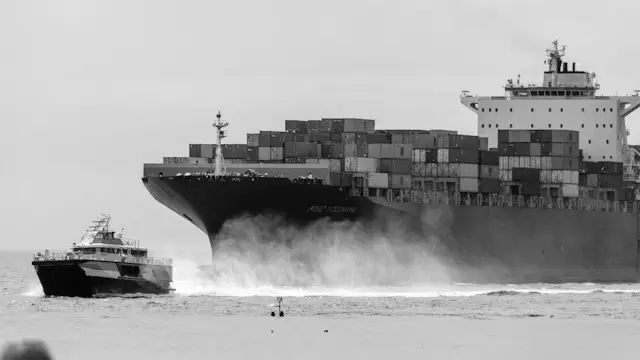
The Strait of Malacca is one of the most strategic points in global trade. According to the US Energy Information Administration, oil flows through the strait averaged 23.2m barrels a day in the first half of 2025, equivalent to around 29% of total global maritime oil flows. The strait is a vital link between West Asian energy suppliers and East Asian markets.
ASEAN has a direct position through its coastal countries, particularly Indonesia, Malaysia and Singapore. India, meanwhile, lies on the western side of the Indian Ocean region and has a major interest in the smooth flow of trade towards Southeast Asia. The strategic positions of the two sides are therefore complementary. ASEAN offers proximity to maritime routes and East Asian production networks, while India provides a large market, industrial capacity, technology and economic ties with the Indian Ocean region.
However, geographical position does not automatically translate into economic power. Its value depends on countries’ ability to develop connectivity, infrastructure, regulatory certainty and production networks that make trade more efficient.
ASEAN-India relations already have a strong institutional foundation. The two sides established a full dialogue partnership in 1995 and developed it into a comprehensive strategic partnership in 2022. In the economic sphere, the two sides signed the ASEAN-India Trade in Goods Agreement (AITIGA) in 2009, and it entered into force in 2010. Agreements on trade in services and investment followed, signed in 2014 and in force from 2015.
According to the ASEAN Secretariat, two-way ASEAN-India merchandise trade reached $106.83bn in 2024. In the same year, India’s foreign direct investment in ASEAN amounted to $3.5bn. These figures show that economic relations have reached a significant scale. However, substantial trade does not automatically translate into deep industrial integration. The challenge is to expand productive investment, connect small and medium-sized enterprises to regional supply chains and reduce trade barriers that increase production costs.
For this reason, reviewing AITIGA is important. Both sides need to ensure that the trade agreement facilitates market access, clarifies rules of origin, simplifies customs procedures and reduces unnecessary non-tariff barriers.
From sea routes to production networks
Disruptions in the Strait of Hormuz demonstrate the vulnerability of an economic system that depends on a limited number of strategic routes. The International Energy Agency recorded that around 20m barrels of oil a day passed through Hormuz in 2025, equivalent to approximately one-quarter of global seaborne oil trade. Most of these supplies were destined for Asian markets.
For ASEAN and India, the issue is not limited to oil prices. Energy disruptions can raise the costs of transport, fertilisers, manufacturing, and food, while also pressuring inflation and household purchasing power. The crisis reinforces the urgency of diversifying energy sources, developing renewable energy and co-ordinating regional logistics.
This is where the theory of complex interdependence becomes relevant. Economic dependence can generate mutual benefits, but it can also create vulnerabilities when supplies, transport routes or political relations are disrupted. Healthy integration therefore does not mean increasing dependence without limits, but rather building more diversified interdependence that can withstand shocks.
Competition between the United States and China further reinforces this need. ASEAN and India do not have to choose a single economic bloc. Instead, they can expand co-operation to preserve access to markets, technology, investment and energy sources from a range of partners.
Four agendas for ASEAN-India economic integration
ASEAN and India should use the strategic position of the Strait of Malacca through four main agendas.
The first is stronger maritime connectivity. Ports, logistics services, digital customs and data exchange need to be integrated to make the movement of goods faster and less expensive. Maritime security co-operation is also important to address piracy, shipping disruptions, and risks to critical infrastructure.
The second is building regional production networks. India has a large industrial base, information technology capabilities, a pharmaceutical sector and a substantial domestic market. ASEAN has a manufacturing ecosystem, mineral resources and trade networks connected to East Asia. Collaboration in electronics, electric vehicles, batteries, pharmaceuticals and mineral processing can create greater added value than commodity trade alone.
The third is stronger energy and food resilience. Co-operation should focus on investment in renewable energy, energy storage, fertilisers, agriculture and strategic reserves. The goal is not closed self-sufficiency, but to ensure that disruptions to one supply source do not paralyse the entire economic system.
The fourth is faster digital integration and trade finance. Cross-border payments, interoperability between digital systems and financing for small businesses can extend the benefits of trade to economic actors that have long faced constraints in capital and market access.
Dividing responsibilities and building shared interests
ASEAN needs to preserve its centrality, align the interests of its member states, improve connectivity and ensure that regional investment delivers broadly distributed benefits. Indonesia, as a country bordering the Strait of Malacca and one of ASEAN’s major economies, can help promote co-operation in ports, industry, energy, and cross-border trade.
India, on the other hand, needs to strengthen market access, increase productive investment, share technology and connect its industrial capacity with ASEAN’s needs. India’s Act East policy will be more meaningful if it goes beyond diplomatic relations and produces measurable joint projects.
The theory of comparative advantage explains the benefits of specialisation based on each side’s capabilities. However, in a fragmented global economy, comparative advantage alone is not enough. Global value chain theory is a reminder that countries must also consider who controls technology, financing, standards and distribution. ASEAN-India integration must therefore ensure that both sides are not merely markets and suppliers, but also centres of production, innovation and value creation.
Looking ahead, ASEAN and India need to develop an integration roadmap linking trade, investment, energy, maritime connectivity and digital transformation. Progress should be measured through concrete indicators such as growth in value-added trade, productive investment, lower logistics costs, energy diversification, and small businesses’ participation in supply chains.
Global economic fragmentation certainly increases uncertainty. Yet it also creates opportunities for countries that can build co-operation based on shared interests. The Strait of Malacca should not be viewed merely as a route traversed by the world’s trading ships. It must become a bridge between maritime connectivity and industrial integration. By combining ASEAN’s strategic position with India’s economic capabilities, both sides can build a partnership that expands trade and strengthens Asia’s economic resilience amid changes in the global order.

Eko Setiobudi, SE, ME, is an economist, lecturer at STIES Mitra Karya Bekasi, Indonesia, and business practitioner. His areas of interest include macroeconomics, fiscal policy, financial markets, economic development, international trade, and Indonesia’s role in the global economy. He writes commentary and analysis on Indonesia, ASEAN, Asia, and global economic affairs.