
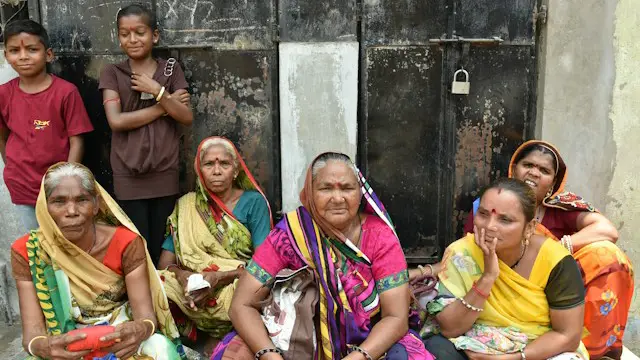
Welfare schemes for women in India need to measure agency
India is becoming a master at incorporating women into welfare programmes. In welfare schemes for women in India, she gets a liquefied petroleum gas (LPG) connection, opens a bank account, gets mentioned in a housing plan or becomes a beneficiary of a programme. There is a press conference, numbers are displayed on a dashboard and the programme is hailed a success. There is a tricky question that comes right after the photograph and the press release. What will she do with the benefit?
This is not a claim that welfare programmes do nothing. It is an argument against confusing delivery with empowerment. A benefit going to a woman is an administrative act. That benefit becoming a game changer in her life is an economic achievement. The two are interlinked, but they should not be confused.
This is especially true for the Pradhan Mantri Ujjwala Yojana (PMUY). By September 23rd 2026, the official PMUY portal counted 105.69m connections distributed. It is a remarkable feat of providing LPG access to eligible households. Yet the connection is only the first step. A cylinder has to be refilled, paid for, delivered and used. A connection cannot cook dinner by itself.
Refill is where policy meets household budget
Official parliamentary figures show that the average annual use of PMUY connections has risen from 3.68 refills per connection in 2021-22 to 4.47 in 2024-25. This is definitely a good trend, and anyone arguing that LPG use has collapsed misses the point. Another parliamentary response shows that 86% of PMUY users took at least one refill in 2024-25.
Nevertheless, the average itself shows that being available and being used regularly are quite different things. According to the Standing Committee on Petroleum and Natural Gas, as summarised by PRS Legislative Research, PMUY users take about four refills a year, while non-PMUY consumers take six to six and a half. This is a purely descriptive comparison, because the two sets of consumers differ a lot in income, location, family size and access to biomass.
PMUY LPG Refills: Headline Gains vs Regular Usage Gap
This is the missing piece in the policy dashboard. When the cylinder is empty, a family will not decide as an economics textbook would predict. The refill has to compete with groceries, education costs, medicines, transport, loan repayments and every other pressing need. The health benefits of reduced pollution build up over time, while the payment for a refill is due now. A family with an irregular income may delay the refill even if it prefers LPG.
Some families thus stock different fuels, using LPG for cooking certain dishes and biomass such as firewood on other days. A low frequency of refilling is not the same as no use, and a few refills do not demonstrate that biomass has been displaced. To understand whether clean cooking has been adopted, the government needs to look at the fuel actually being used rather than the number of connections.
Welfare schemes for women in India name them. Do they decide?
The problem is not limited to LPG. The National Family Health Survey-5 (NFHS-5), covering 2019-21, found that 78.6% of women had a bank or savings account that they themselves used. It also reported that 43.3% owned a house or land, alone or jointly. These are important gains. But neither statistic tells us who controls the money in the account, who decides whether it is withdrawn, or whether a woman can sell, lease or use an asset on her own terms.
NFHS-5 also reported that 71% of currently married women usually participated in three specified household decisions, on their own healthcare, major household purchases and visits to their family or relatives. This is a meaningful measure, but it is not a universal measure of equal bargaining power. Participation does not say how much weight a woman’s preference carries when there is a disagreement. A tick in a survey response cannot reveal every negotiation behind it.
Women’s Access & Participation vs Real Bargaining Power
Time is another constraint, and it is not distributed equally. The Ministry of Statistics and Programme Implementation’s Time Use Survey 2024 found that female participants aged 15 to 59 spent an average of 305 minutes a day on unpaid domestic services for household members. Male participants in the same age group spent 86 minutes. For unpaid caregiving, the corresponding averages were 140 minutes for women and 74 minutes for men.
Now consider the casual advice often given to beneficiaries. Visit the bank. Correct the document. Attend the training. Make another trip to the office or call the helpline again. Each instruction may sound reasonable when issued from an office. For a woman already carrying a disproportionate share of unpaid work, each instruction has a cost. The state may call it a minor procedural step. She experiences it as another claim on a day that is already spoken for.
Stop calling every failure awareness gap
When a scheme is underused, the easy explanation is that people need more awareness. Sometimes they do. But information cannot solve every problem. A reminder cannot make an unaffordable cylinder affordable. A mobile application cannot repair an unreliable delivery network. A bank account cannot guarantee that the account holder controls the household’s spending. And a training session cannot create free time for someone who has none.
Behavioural economics helps explain why people postpone decisions, follow familiar routines or respond to immediate costs. But it should not become a polite way of blaming beneficiaries for constraints created by prices, services and unequal power. A nudge is not a substitute for a subsidy, a functioning distributor, accessible grievance redress or control over resources.
The right question is not “Why did she fail to use the benefit?” It is “Which part of the system made using the benefit costly, uncertain or beyond her control?” That change in question matters. It moves the burden of explanation away from the woman and towards the design and delivery of the programme.
Measure what happens after announcement
First, departments must disclose an access-to-outcome chain for welfare, instead of equating enrolment with outcomes. For a clean-cooking initiative, this means disclosing connections, active users, the frequency of refills and its distribution, and assessing fuel stacking and the affordability of refills separately. These statistics should be broken down by rural and urban areas, state, income category and any other useful characteristic.
For women’s welfare, the assessment of programme impact should examine whether the recipient can access and control the resource, whether she can reach the service without frequent visits, whether the benefit saves her time, increases her mobility and affects her participation in household decision-making. Such assessments need surveys and evidence from the field, not merely administrative reports.
Second, solve the physical constraint first and then prescribe the behavioural one. If affordability is the binding constraint, look at the sufficiency of the subsidy, small-cylinder alternatives and predictable pricing. If distance or delivery is the constraint, improve last-mile supply and grievance redress. If safety is a concern, offer reliable demonstrations and maintenance services. If the woman does not control the refill decision within her household, engage the household in an appropriate way without putting her under the microscope.
Third, make administrative convenience an indicator of performance. Publicise the number of visits a beneficiary has to make, the time taken to rectify errors, the number of complaints resolved and how often a person is referred from one department to another. If a scheme makes a beneficiary a full-time record keeper, the programme has off-loaded its transaction costs on the very person it intends to help.
Finally, measure agency directly and carefully. Ask women whether they can decide how a benefit is used, whether they can access the money or service when needed, and whether the programme has changed their time, mobility or choices. No single indicator will capture empowerment. That is not an excuse to avoid measuring it.
Name on a form is a beginning, not a victory
India should be proud of its efforts to improve women’s access to welfare schemes. India should also stop demanding that the figures prove what they cannot. A number of connections proves only the release of connections. A number of bank accounts proves only access to, or use of, those accounts as defined by surveyors. Neither means control, consistent use or freedom of choice.
The next round of welfare reform in India will have to be more concerned with what happens after a woman’s name joins the list of beneficiaries. Will she be able to afford the refill? Will she be able to use the account? Will she be able to reach the service without missing a day’s work? Will she be able to decide how the resource is used?
If the answer to any of these questions is uncertain, the work is incomplete. A welfare scheme has no right to take pride in its list and leave the woman to navigate alone. To put it bluntly, delivery is the government’s task.

Nandni Joshi is an independent Economist researcher and a writer. Her work focuses on public policy, welfare delivery, development and the gap between programme design and lived outcomes.