
CV Raman’s contributions to science and why they endure
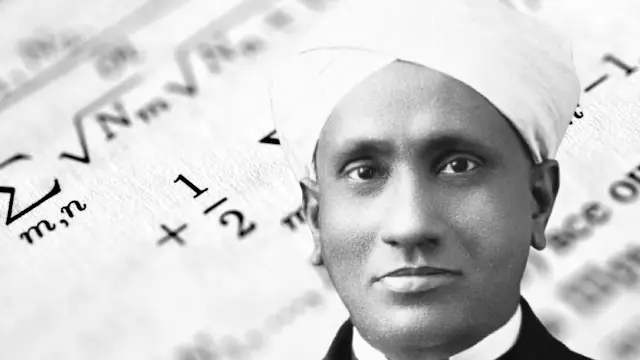
November holds a special place in the history of science. Sir Chandrasekhara Venkata Raman, one of India’s most celebrated scientists, was born on November 7th 1888. His name was announced as the winner of the Nobel Prize in Physics on November 13th 1930, and he died on November 21st 1970. November 10th is observed every year as World Science Day for Peace and Development. When these important dates are remembered, it is an appropriate time to reflect on CV Raman’s contributions to science.
An early start and a research career in Calcutta
Raman was born in Tiruchirappalli. From an early age, he showed remarkable academic ability. He secured the first rank in his degree examination at Presidency College, Madras, in 1904 and received a gold medal in physics. He completed his postgraduate studies in 1907. Because opportunities for scientific research were limited at the time, he joined the Indian Finance Department. However, his official responsibilities did not reduce his interest in research. He made good use of the opportunities available at the Indian Association for the Cultivation of Science in Calcutta and continued his scientific work.
His appointment as professor of physics at the University of Calcutta in 1917 marked an important turning point in his scientific career. He conducted research in several areas, including the nature of light, acoustics and the working principles of musical instruments. He was particularly interested in understanding the scientific principles behind the sounds produced by traditional musical instruments such as the veena, violin and mridangam. His work reminds us that even ordinary things around us can hold remarkable scientific secrets.
The discovery behind the Raman Effect
On February 28th 1928, Raman made a significant observation about light scattering as part of research conducted in cooperation with KS Krishnan. The discovery showed that a small portion of light scattered by a transparent substance could have a different wavelength from the incident light. This finding brought a major change to the study of light-matter interaction. The phenomenon later became known as the Raman Effect. A research paper jointly written by Raman and Krishnan was published in the journal Nature on March 31st 1928.
In 1930, Raman received the Nobel Prize in Physics for his work on light scattering. He became the first Asian to receive a Nobel Prize in a scientific field. The award ceremony took place on December 10th 1930. One reason I admire Raman is that he achieved international recognition through research conducted in India. His life challenges the idea that major scientific achievements are possible only with facilities available abroad.
Building institutions for Indian science
On March 31st 1933, Raman became the first Indian director of the Indian Institute of Science. He stepped down from the directorship on July 19th 1937, but continued as a professor of physics there until 1948. He also played a leading role in establishing the Indian Academy of Sciences in 1934. The academy was registered on April 24th 1934, and formally inaugurated on July 31st of the same year. It made an important contribution to promoting scientific research and encouraging young researchers. In 1948, Raman established the Raman Research Institute and continued his research activities there.
Spirit of inquiry: lesson for teachers
Another quality of Raman that I greatly admire is his spirit of inquiry. Even an ordinary sight, such as the blue colour of the sea, inspired him to ask scientific questions. During his voyage to Europe in 1921, he observed the blue colour of the Mediterranean Sea. This observation became one of the inspirations for his further studies on light scattering. As a teacher, I feel that one of the most important lessons from his life is that education should not merely provide information to students. It should also develop their powers of observation and encourage them to ask questions.
Women in science in Raman’s time
There were also limitations and challenges regarding opportunities for women in science during Raman’s time. The historical episode concerning Kamala Sohonie’s admission to the Indian Institute of Science is one example. Historical accounts indicate that she initially faced opposition on gender grounds and was later admitted subject to certain conditions. While appreciating the achievements of a great scientist, it is also important to understand such incidents as part of the history of that period. The present generation must recognise the importance of equal opportunities for women in scientific education and research.
Bharat Ratna and a lasting legacy
After receiving the Nobel Prize in 1930, Raman was honoured with the Bharat Ratna in 1954. He was one of the three recipients of India’s highest civilian award in the very first year in which it was instituted. Chakravarti Rajagopalachari and Sarvepalli Radhakrishnan were the other two recipients that year. This honour was a significant recognition of Raman’s contributions to science and to the country.
His discoveries, research institutions and scientific outlook continue to inspire new generations. In India, February 28th is observed every year as National Science Day in memory of the discovery of the Raman Effect. The day reminds us of science’s importance and its contribution to human progress.
Why Raman’s contributions to science still matter
Whenever I think of CV Raman, I feel deep respect and admiration for him. I have admired him since my childhood. His extraordinary intelligence, powers of observation and remarkable discoveries have always fascinated me. His contribution to building a strong foundation for scientific research in India and establishing institutions that encourage research can never be forgotten. His discoveries are not limited to his lifetime. Their relevance will continue as science advances. Raman is an indispensable name in the history of Indian science. In my mind, he remains the greatest scientist and the one I admire most. Whenever I read about him or remember his achievements, I feel proud as an Indian. His scientific contributions, intellectual brilliance and discoveries will continue to guide and inspire future generations.

V Rajesh Mohan Rao is a higher secondary commerce teacher based in Dharmadam, Thalassery, Kerala. He writes about cinema, literature, culture, language, heritage and social life, with an interest in the relationship between artistic expression and everyday human experience.