
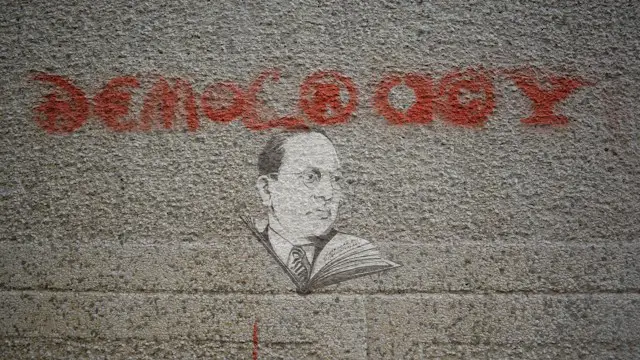
Citizen participation in democracy doesn’t end at ballot box
India has come to embrace a notion of democracy that demands very little citizen participation beyond voting. Citizens cast their votes, governments are formed, and politicians, party spokespersons, and television studios increasingly take over public life. Citizens matter most during elections. More and more, everything that follows is treated as someone else’s responsibility. Yet the Constitution never envisioned democracy as something that occurs once every five years. It defined citizenship as an ongoing responsibility, one that endures long after the votes have been counted. Elections decide who governs. They were never intended to decide when citizens cease to participate.
BR Ambedkar told the Constituent Assembly on November 4th 1948 that constitutional morality “is not a natural sentiment” and “has to be cultivated”. Cultivating it is a task for citizens as much as for institutions, and it depends on citizen participation between elections.
This diminishing notion of democracy has repercussions. Indians have gradually started to conflate citizen participation with representation, as if choosing a government absolves them of the duty to challenge it. Speech, assembly and dissent are now viewed as interruptions to governance rather than as fundamental democratic behaviours. On election day, the citizen makes a brief appearance before quietly abandoning politics to be negotiated by those in positions of authority. Somewhere between voting and living, citizenship became passive, and with it citizen participation.
What the CJP movement says about citizen participation in democracy
It is fair to consider the current mobilisation of the Cockroach Janata Party’s (CJP) movement to be more than just a protest. Neither the number of attendees nor whether everyone agreed with Sonam Wangchuk’s political stance mattered to its significance. Many did not agree. They acknowledged something more basic, however: a citizen’s ability to challenge authority cannot depend on shared ideologies. The movement grew into the assertion that all people, regardless of their personal beliefs, have equal constitutional rights. By defending one citizen’s right to be heard, thousands defended the idea of citizenship itself. In the end, the movement defended citizen participation as a right, not a favour.
Perhaps this is why the movement’s importance extended beyond its immediate demands. Power has long rested on the notion that dissent can be managed, repressed or eventually forgotten. Instead, a generation arose that refused to accept that engagement ceases after elections. The moment’s political significance cannot be measured in election results. It was a reminder that citizen participation in public life – questioning authority and organising – does not undermine democratic governance but helps sustain it long after the ballots have been counted.
Why every struggle has to go to Delhi
The problem grows larger beyond the movement itself. People across India organise around land, wages, education, displacement and policy, frequently without their battles ever reaching the national discourse. A protest in Delhi, however, commands political urgency and attention that is uncommon elsewhere. Citizens who want the institutions of power to pay attention are expected to bring their demands to the capital. That a claim comes from a rural village in Ladakh, Manipur, or Bastar instead of Delhi does not diminish its legitimacy. Citizen participation that must first reach Delhi is participation on conditional terms.
Why does every struggle have to go to Delhi before it can be seen? A constitutional democracy cannot operate on the presumption that citizens must first travel to the capital to be considered worthy of a hearing.
The media and uneven attention
The media contributes to this uneven exposure. A village rejecting a move that could permanently change its land or means of subsistence might get only local coverage, while a protest in the capital can swiftly become a national issue. Those who make it to the capital take centre stage in the national discourse, while many conflicts remain confined to local activists, regional newspapers or social media. The lack of coverage then becomes yet another way to remain absent from public life. Coverage shapes which acts of citizen participation count. The question, therefore, is not just what the media chooses to report, but what kind of citizenry the nation is being taught to observe.
Citizen participation beyond the ballot box
Perhaps one of the biggest political successes of this era has been persuading the public that citizen participation is finished once a government is elected. It has become normal to assume that organising, questioning and resisting – the work of citizen participation – are responsibilities left to activists while everyone else watches from a distance. Yet governments alone do not sustain democracies. Long after elections are over, they persist because ordinary people continue to demand accountability from public institutions.
What worries the author is not only that some protests go unnoticed or that some conflicts receive more attention than others. It is that citizens have grown more at ease delegating this duty to others. While the rest observe from a distance, they expect activists to demonstrate, journalists to inquire and institutions to react.
Being a citizen does not mean selecting a government and then stepping away from what it does. Citizen participation, in this sense, is a habit, not an event. It means remaining present enough to question power, even when the issue is not one’s own, the person protesting is not someone one agrees with, and the place demanding to be heard is nowhere near.

A third-year architecture student at Anant National University, Ahmedabad, and a writer interested in the intersections of politics, public space, architecture, and everyday life.