
Hindutva intensifies assaults on liberty under Modi’s watch
Television journalist Ravish Kumar faced intense criticism after speaking against the Rashtriya Swayamsevak Sangh (RSS) on his NDTV programme. Kumar had discussed the pressure that progressive and liberal voices experience in contemporary India. Social media campaigns quickly labelled him “anti-national.” Online activists, allegedly organised through coordinated efforts, subjected him to sustained abuse.
The incidents reveal a troubling pattern. Critical journalists and public intellectuals increasingly report intimidation campaigns. These attacks raise fundamental questions about India’s commitment to free speech and open debate. The incidents coincide with a period when right-wing political movements have consolidated significant power across multiple Indian states.
When journalism becomes dangerous: Toll on independent reporting
Journalist and writer Nikhil Wagle has received repeated death threats.
The Sanatana Sanstha, a Hindu traditionalist organisation, has publicly denounced him.
Wagle previously faced physical assault by the Shiv Sena for his critical reporting. His office experienced multiple attacks. Yet he has continued his journalistic work without compromising editorial standards.
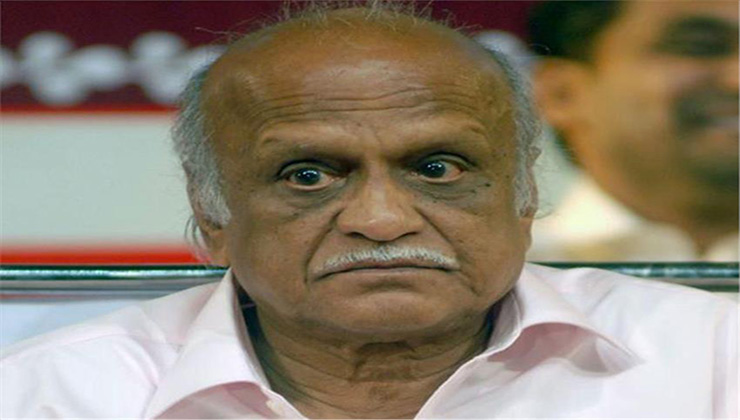
Rationalist and academic MM Kalburgi was shot dead at his home in Dharwad, Karnataka, in 2015. Kalburgi had written critically about certain Hindu religious practices.
A Bajrang Dal leader publicly celebrated the murder on social media. Police investigations have emphasised property disputes rather than ideological motivations, despite the evident targeting of his intellectual positions.
KS Bhagwan, a noted rationalist writer, has received death threats following his 1985 book critiquing Hindu religious authority. These threats followed decades after publication, suggesting a systematic effort to silence historical critics of certain religious interpretations.
State’s role under scanner: Why protection fails
India’s police and administrative systems have consistently failed to protect targeted intellectuals. Several factors explain this failure. Upper-caste Hindu personnel dominate Indian police forces. This demographic reality shapes institutional responses to ideological violence.
Wagle expressed his distrust of police protection directly. He argued that law enforcement remains inactive during attacks by those aligned with majoritarian political movements. When state institutions fail their protective duty, targeted individuals lose institutional recourse.
Prime Minister Narendra Modi’s government was formed in 2014 with a substantial parliamentary majority. Critics argue that the administration has escalated pressure on dissident voices. Historical precedent exists for such tactics.
Indira Gandhi‘s government employed repressive measures against the opposition during the 1975-77 National Emergency. The current administration, according to observers, has intensified these practices rather than moderated them.
Progressive resistance: Challenges ahead
The progressive left has struggled to mount an effective counter-mobilisation. When Kumar faced online attacks, progressive intellectuals engaged primarily on social media. Debates about his employment at corporate media outlets overshadowed direct condemnation of the intimidation campaign itself.
This represents a strategic failure. The principle that journalists and intellectuals deserve protection from threats must transcend disagreements about institutional affiliation. Progressive forces must distinguish between legitimate ideological criticism and support for physical intimidation and death threats.
The RSS operates through multiple affiliated organisations. Modi’s ruling Bharatiya Janata Party (BJP) functions as its primary political vehicle. Together, these groups have mobilised significant sections of Hindu communities around a unified ideological programme. Mainstream corporate media have largely failed to challenge this mobilisation critically in the last several years.
Building effective counter-resistance requires deliberate strategy. Progressive movements must establish broad coalitions against authoritarianism. These coalitions must extend beyond social media platforms into communities where the RSS actively recruits. The target audience must include working-class and peasant populations that form the BJP’s electoral base.
Stakes: Democracy and Hindutva visions of India
The RSS presents itself as defending Hindu traditions. Its political ideology encompasses Hindu nationalism as the organising principle for the Indian state and society. Critics contend that this ideology fundamentally conflicts with India’s secular constitutional framework. The RSS vision prioritises Hindu cultural and religious authority above democratic pluralism.
The trajectory matters immensely. The last two years have witnessed intensifying attacks on journalists, activists, and intellectuals. Coordinated intimidation campaigns have become systematic rather than sporadic. Police ineffectiveness, combined with state indifference, creates space for such campaigns to expand unchecked.
Progressive movements must confront this challenge directly. They must mobilise popular support for constitutional secularism. They must defend journalism and academic freedom as essential to democratic life. They must build organisations capable of protecting vulnerable intellectuals and journalists from coordinated harassment.
The question facing India’s progressive forces remains fundamental. Can democratic institutions and values be defended against systematic assault? Can popular movements coalesce around principles of free speech and intellectual liberty? The answer will determine whether India’s democratic experience can survive intensifying ideological pressure from well-organised authoritarian movements.

An avid reader and a merciless political analyst. When not writing then either reading something, debating something or sipping espresso with a dash of cream. Street photographer. Tweets as @la_muckraker