
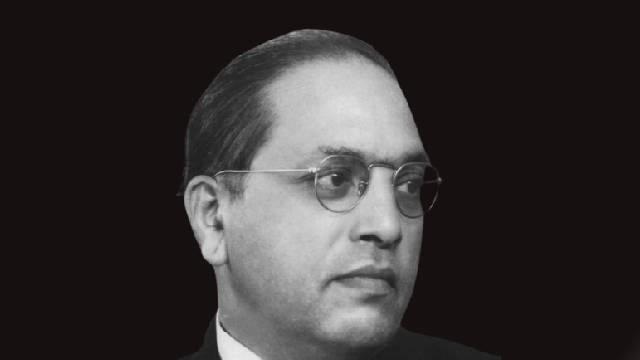
From a caste symbol to a national icon: why more young women are discovering Ambedkar
For a long time, Bhim Rao Ambedkar occupied a complicated place in India’s public imagination. He was unquestionably recognised as the principal architect of the Constitution and as one of India’s greatest social reformers. Yet, in popular political and social discourse, his identity was often reduced to that of a Dalit leader. His photograph, statues and slogans were frequently associated primarily with Dalit politics.
Something appears to be changing.
In recent years, particularly with the rise of social media and a politically conscious Gen Z, more young Indians are encountering Ambedkar not merely as a historical figure but as a thinker. Among young women, including women from traditionally privileged and upper-caste backgrounds, there is a growing discovery that Ambedkar’s ideas were not confined to caste.
They are discovering an Ambedkar who fought for women’s rights, education, economic independence, constitutional equality, labour rights, political representation and individual dignity.
That discovery could change how Ambedkar is understood in India.
Discovery of a different Ambedkar
Imagine a young woman growing up in a relatively privileged family. She may have heard about Ambedkar at school. She may have seen his statue or photograph. She may have associated “Jai Bhim” with Dalit movements and perhaps assumed that Ambedkar’s political importance was primarily about caste.
Then she begins reading about the Hindu Code Bill.
She discovers that Ambedkar, as India’s first Law Minister, fought for reforms that would give Hindu women greater rights relating to property, inheritance, marriage, divorce, adoption and maintenance.
Suddenly, Ambedkar becomes personally relevant.
She may realise that some of the rights she takes for granted today – such as the legal recognition of women as individuals with rights within marriage and family – were part of battles fought generations earlier.
This can produce an interesting psychological shift.
Ambedkar is no longer simply “the leader of another community.”
He becomes a person who fought for her rights too.
That is perhaps one of the most important changes taking place.
Significance of young Brahmin women discovering Ambedkar
The growing interest among some young Brahmin women and girls is particularly significant because it challenges the old idea that Ambedkar belongs politically or culturally to only one social group.
A young Brahmin woman saying “Jai Bhim” today does not necessarily mean she has changed her caste identity or joined a particular political organisation. It can simply mean that she respects Ambedkar’s philosophy of equality.
That distinction matters.
Consider a young woman who says:
“I am proud of my family and cultural background, but I also believe that nobody should be treated as inferior because of the caste into which they were born.”
There is no contradiction in these two positions.
In fact, that is precisely where Ambedkar’s philosophy becomes universal.
The point of equality is not to ask one group to hate another. It is to create a society in which birth does not determine human worth.
Similarly, a young woman might discover that Ambedkar’s criticism of social hierarchy was not an attack on individual people. His argument was fundamentally about a system in which social status could be inherited by birth.
That distinction allows people from communities historically associated with privilege to engage with Ambedkar without feeling personally attacked.
“Jai Bhim” without hesitation
The growing willingness among some young people to say “Jai Bhim” openly is culturally interesting.
For decades, slogans associated with Ambedkar were often interpreted through a caste-political lens. Saying “Jai Bhim” could be understood as signalling a particular social or political identity.
For a section of today’s youth, however, the phrase is acquiring another meaning. It can signal respect for equality, respect for constitutional values, opposition to discrimination and respect for Ambedkar’s contribution to India.
That does not mean every person using the slogan necessarily understands Ambedkar deeply. Nor should the change be romanticised. Social media can turn even great thinkers into slogans.
But the fact that young people are willing to engage with the symbol without the old hesitation is nevertheless meaningful.
It suggests that Ambedkar may be moving from a community icon to a national icon.
Social media changed discovery process
Earlier generations largely encountered Ambedkar through textbooks, political speeches, statues, commemorations and community organisations.
Gen Z encounters him differently.
A young woman can watch a video of Ambedkar speaking about democracy in the morning, read an extract from Annihilation of Caste in the afternoon, discover his views on women’s rights in the evening and then participate in an online discussion at night.
The gatekeepers of history have changed.
Young people can now compare different interpretations and discover original writings.
This has helped create a more multidimensional image of Ambedkar. Instead of Ambedkar simply meaning a Dalit leader, the emerging understanding treats him as a composite figure: an architect of Dalit emancipation, constitutional democracy, women’s rights, economic justice, education, political equality and human dignity.
That is a much more complete Ambedkar.
Women’s rights may become bridge
Interestingly, women’s rights may be one of the strongest bridges through which privileged women discover Ambedkar.
A young woman may initially encounter him because of caste history. But once she reads about the Hindu Code Bill, she may discover another Ambedkar.
She finds a law minister who believed that women should have rights within marriage.
She discovers his concern about property and inheritance.
She learns that he supported maternity protection and labour reforms.
She sees the constitutional provisions concerning equality, non-discrimination, equal opportunity and maternity relief.
And then an important realisation can occur:
“He was not fighting only for Dalit women. He was arguing for a different legal status for women.”
This is where Ambedkar becomes relevant to every woman.
CJP movement and language of equality
The Cockroach Janata Party (CJP) movement, associated with Abhijeet Dipke, has provided a platform for discussions around equality, constitutional values, and secularism.
Its significance is less about being another political movement and more about a broader attempt to spark conversations about what kind of India young Indians want to inherit.
For a young person who feels uncomfortable with excessive caste or religious polarisation, Ambedkar offers a powerful vocabulary.
He provides three particularly important ideas: Liberty. Equality. Fraternity.
These are not merely constitutional words.
They are a social philosophy.
Liberty means that an individual should have space to think and live freely.
Equality means that birth should not determine human worth.
Fraternity means that citizens should see one another as fellow human beings rather than permanent members of opposing social groups.
That third idea – fraternity – is often overlooked.
Secularism becoming attractive again
There is also renewed interest among sections of young people in the idea of secularism.
For some members of Gen Z, secularism is increasingly understood not as opposition to religion, but as equal respect and equal citizenship regardless of religion.
This interpretation fits naturally with constitutional thinking.
A young Hindu woman can remain deeply connected to her culture while believing that a Muslim, Christian, Sikh, Buddhist or atheist citizen must enjoy exactly the same constitutional dignity.
A young person can respect religious traditions while rejecting discrimination.
That is not necessarily a rejection of tradition.
It is an attempt to separate personal faith from unequal citizenship.
Ambedkar’s constitutional vision provides a strong foundation for that approach.
‘I am Brahmin, and I admire Ambedkar’
This statement would once have sounded contradictory to many people.
Today, it need not.
A young Brahmin woman can say:
“I am proud of my family background. But I don’t believe my birth makes me superior to anyone else. I admire Ambedkar because he fought to make that principle part of India’s constitutional democracy.”
That is actually a powerful form of Ambedkarite thinking.
The purpose of equality is not to erase identity.
It is to ensure that identity does not become a reason for discrimination or superiority.
Similarly, a Dalit woman can say:
“Ambedkar gave my community a voice, but his constitutional ideas belong to every Indian.”
Both statements can coexist.
Danger of superficial adoption
There is one important caution.
The growing popularity of Ambedkar should not become another fashion trend.
Putting his photograph on Instagram, using “Jai Bhim” as a social-media identity or quoting one famous sentence does not automatically mean understanding Ambedkar.
The real question is whether the philosophy changes behaviour.
If someone says “Jai Bhim” but continues to believe that people of another caste are inferior, the slogan has little meaning.
If someone praises Ambedkar but opposes equality for women, again, something is missing.
If someone celebrates the Constitution but believes that citizens should receive different rights because of religion, caste or social status, the contradiction is obvious.
Ambedkar cannot be reduced to a hashtag.
His philosophy demands uncomfortable self-questioning.
Real meaning of adopting Ambedkar
Perhaps the most positive development is that Ambedkar’s adoption by people outside traditionally Ambedkarite communities can create a larger national conversation.
If a Dalit young man sees Ambedkar as the person who gave his community political dignity, that is legitimate.
If a young Brahmin woman sees Ambedkar as the person who fought for women’s legal rights, that is equally legitimate.
If a Muslim student sees Ambedkar as a defender of constitutional citizenship, that is legitimate too.
If an entrepreneur sees Ambedkar’s emphasis on education and economic independence as relevant to social mobility, that is another dimension.
The beauty of a truly national icon is precisely this: different people discover different parts of the same person.
Journey has started – but it is far from over
The increasing interest in Ambedkar among young women and people outside historically Ambedkarite communities should therefore be welcomed.
It represents a movement from ownership to appreciation.
Ambedkar does not have to belong only to one caste.
He belongs to the history of Indian democracy.
But adoption should not mean appropriation. It should mean understanding.
The ultimate test is not how many people say “Jai Bhim.” The test is whether more people begin to believe what Ambedkar stood for: that a person’s birth should not determine their dignity; that women deserve equality; that education creates freedom; that constitutional rights belong to everyone; that democracy requires social equality; and that fraternity is as important as political freedom.
If a young Brahmin girl can say “Jai Bhim” today without embarrassment, fear or political calculation, that is indeed a significant cultural change.
But the larger victory will come when she can say it – and genuinely live by its underlying principle:
“I may have been born into a particular identity, but I do not believe that my identity makes me superior to another human being.”
That is where the journey from Ambedkar as a Dalit icon to Ambedkar as a national icon truly begins.
And that journey, while encouraging, is still very far from complete.